Architecture
What is a Joglo?
A Joglo is a traditional Javanese house, built in teak, whose name describes its roof: a tall, stepped, pyramid-like form held up by four central posts. It is Javanese rather than Balinese, and many of the Joglos you can stay in on Bali were carried there from Java.
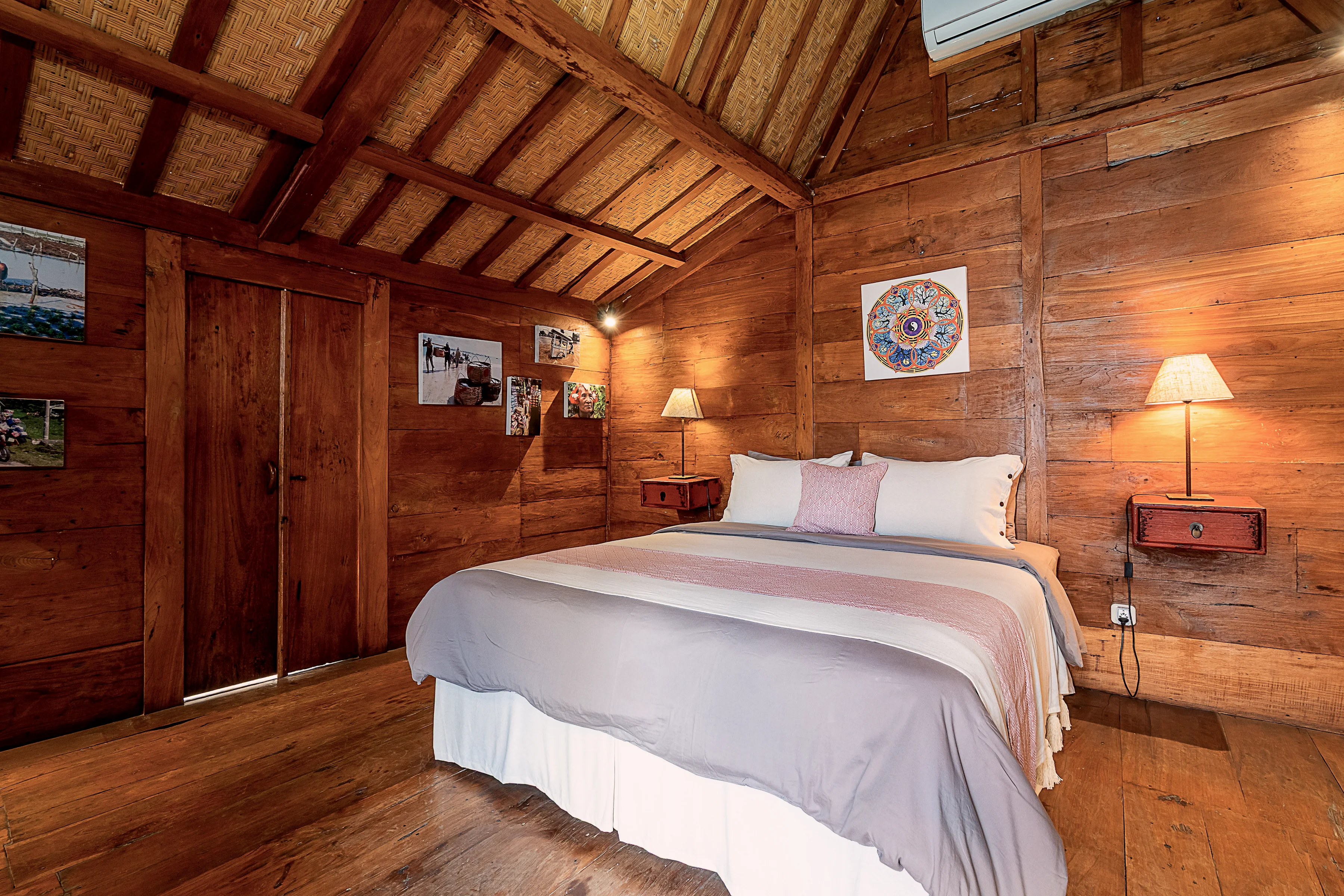
The roof and the four posts
Everything in a Joglo follows from the roof. It is carried by four main posts, called soko guru in Javanese, which stand at the centre of the building and take the whole weight. Above them, layers of carved timber beams — the tumpang sari — step inward toward the peak, like an inverted pyramid of wood, and the outer edges flare out.
Because the roof rests on those four posts, the walls carry no load, which is why a Joglo can be open on its sides and still stand.
Status in timber
Joglo houses are traditionally associated with the Javanese aristocracy, and the form flourished under the Mataram sultanate between the 16th and 18th centuries. In Javanese culture the roof of a house reflected the standing of its owner; the more layers in the tumpang sari, the higher the status it signalled.
Why teak
Teak is the traditional timber: dense, durable and resistant to rot and insects, which is why a Joglo can last a century or more. Old teak also darkens and smooths with age, and the carving on a good Joglo is deep enough to read as shadow.
Joglo and bale
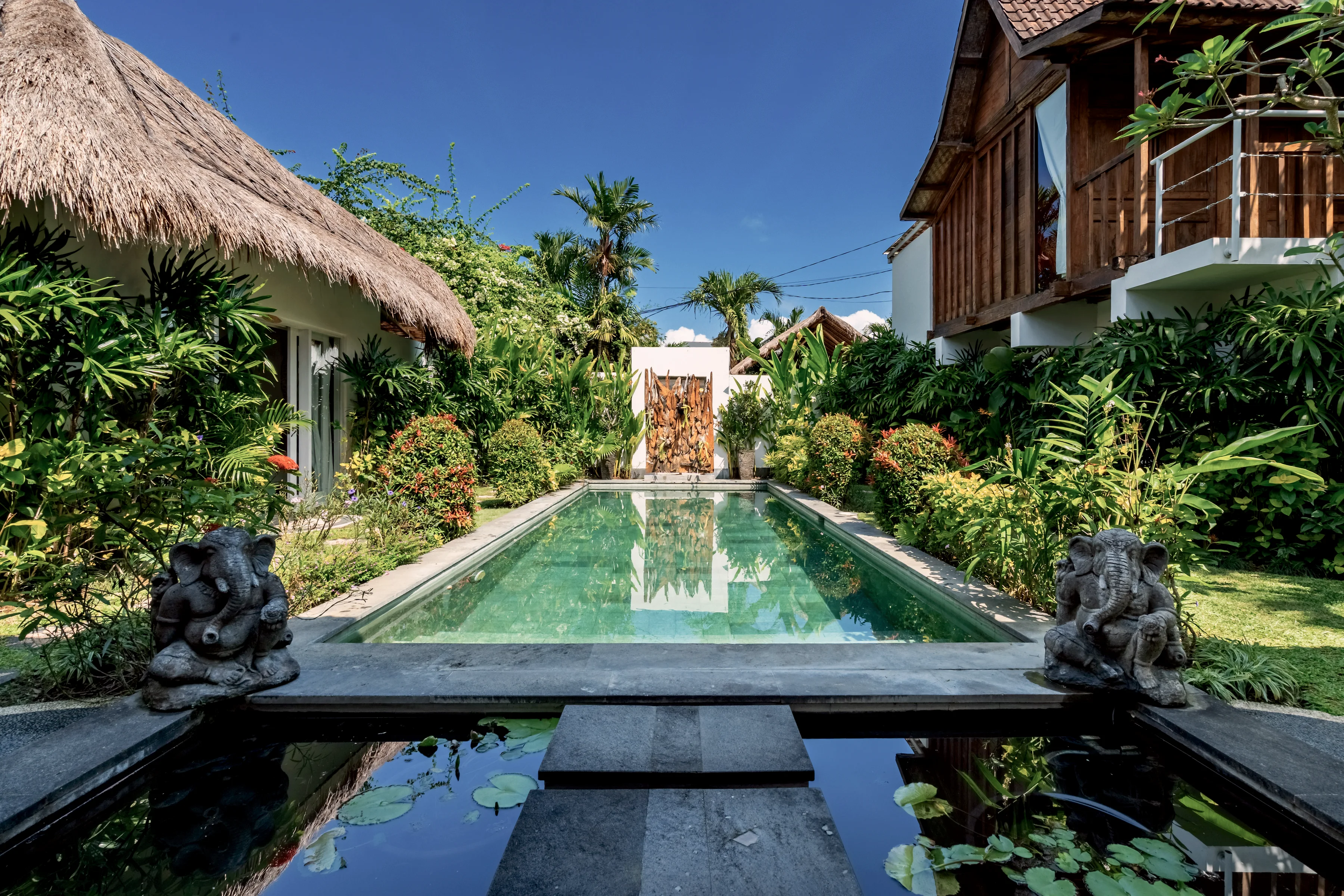
A Balinese bale is an open pavilion, usually thatched or tiled, raised on a base and used for sitting, eating, meeting and ceremony. A Joglo is a different building from a different island, with a different roof and a different structure. Bali has both: bales are everywhere, and Joglos arrived later.
Why there are Javanese houses in Bali
Over recent decades many old Joglos have been taken down plank by plank and rebuilt elsewhere, including in Bali’s villas, restaurants and hotels. The carpentry and the aged teak are valued, and a Joglo is designed to be assembled from numbered parts, so it travels better than most buildings.
Staying in one
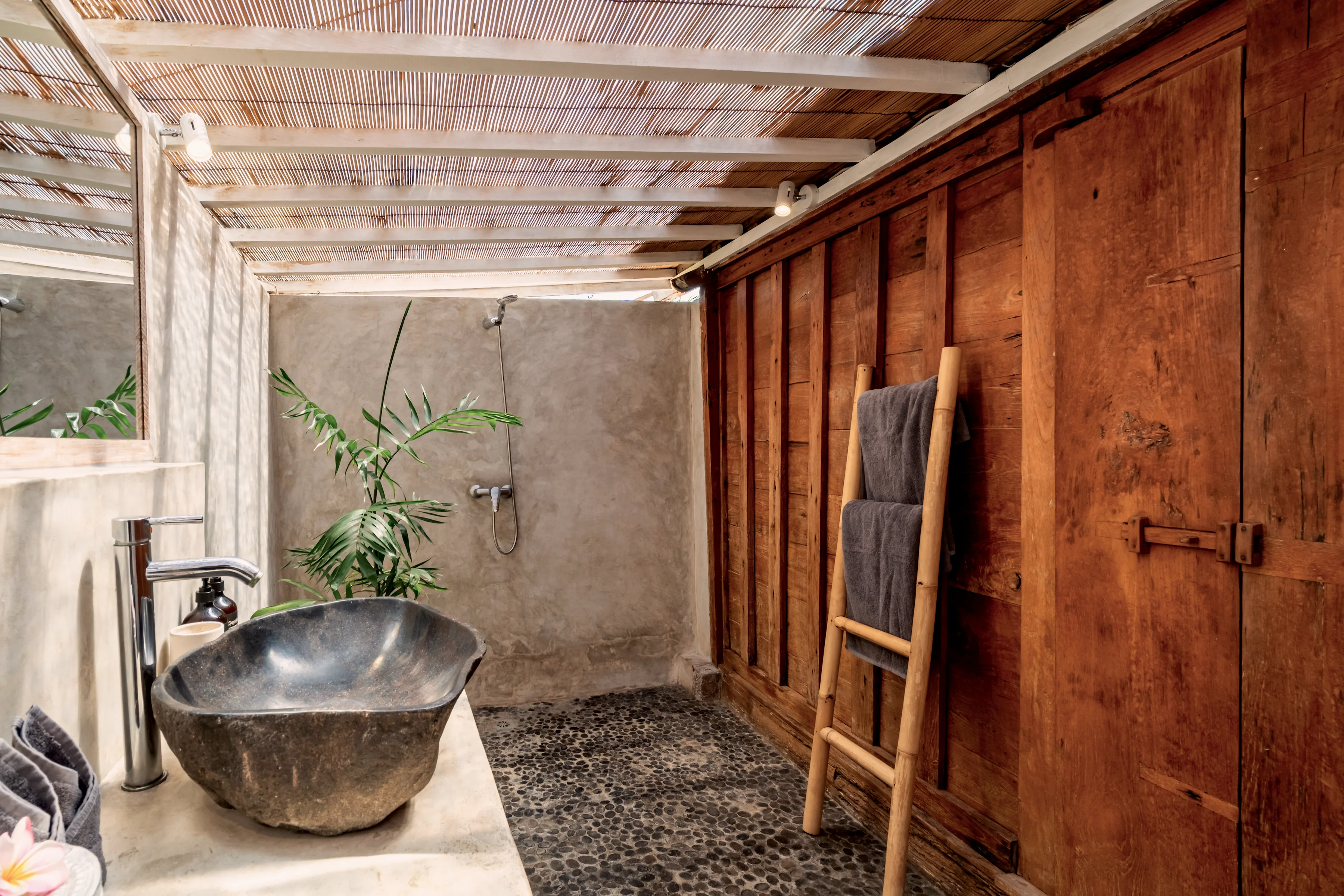
Villa Aniri in Seminyak keeps a teak Joglo as one of its four bedrooms, with a thatched bale and an open living pavilion in the same garden. See stay in the Joglo for the house, or the gallery for the carpentry up close.
Questions people ask
Straight answers
What does Joglo mean?
It names the roof: a tall, stepped, pyramid-like roof characteristic of a traditional Javanese house.
What are soko guru?
The four main posts at the centre of a Joglo that carry the entire roof.
What is tumpang sari?
The layered, carved timber beams that step inward above the four posts toward the peak of a Joglo roof.
Is a Joglo Balinese?
No. It is Javanese. Bali’s own pavilions are called bale.
Why is a Joglo built of teak?
Teak is dense, durable and resistant to rot and insects, so a Joglo can last for generations.
Also at Villa Aniri
The next question
Check your dates
Villa Aniri sleeps eight in four bedrooms — sixteen or twenty-four with the houses either side — from IDR 5.399.156 a night, staff and daily housekeeping included. The availability check is live, and a request costs you nothing but three fields.
Keep reading
Related guides
This guide keeps to what we can vouch for: this house, this lane, and things that are simply true of Bali. Where it would need a fact we have not checked — a restaurant’s current form, a price we do not set, a rule that changes — we have left it out rather than guessed, and said who to ask instead. If something here is wrong or out of date, tell us and we will fix it.